K-Bank IPO Analysis: Third Attempt and Strategic Outlook

📌 Introduction
K-Bank, Korea’s first internet-only bank, is preparing for its third IPO attempt. With a hard deadline of July 2026 and binding contracts with financial investors (FIs), this is not just a strategic move—it’s a necessity.
Disclaimer:
This article is for informational purposes only and does not constitute investment advice. Readers are solely responsible for their own investment decisions.
1. K-Bank: A Digital Banking Pioneer
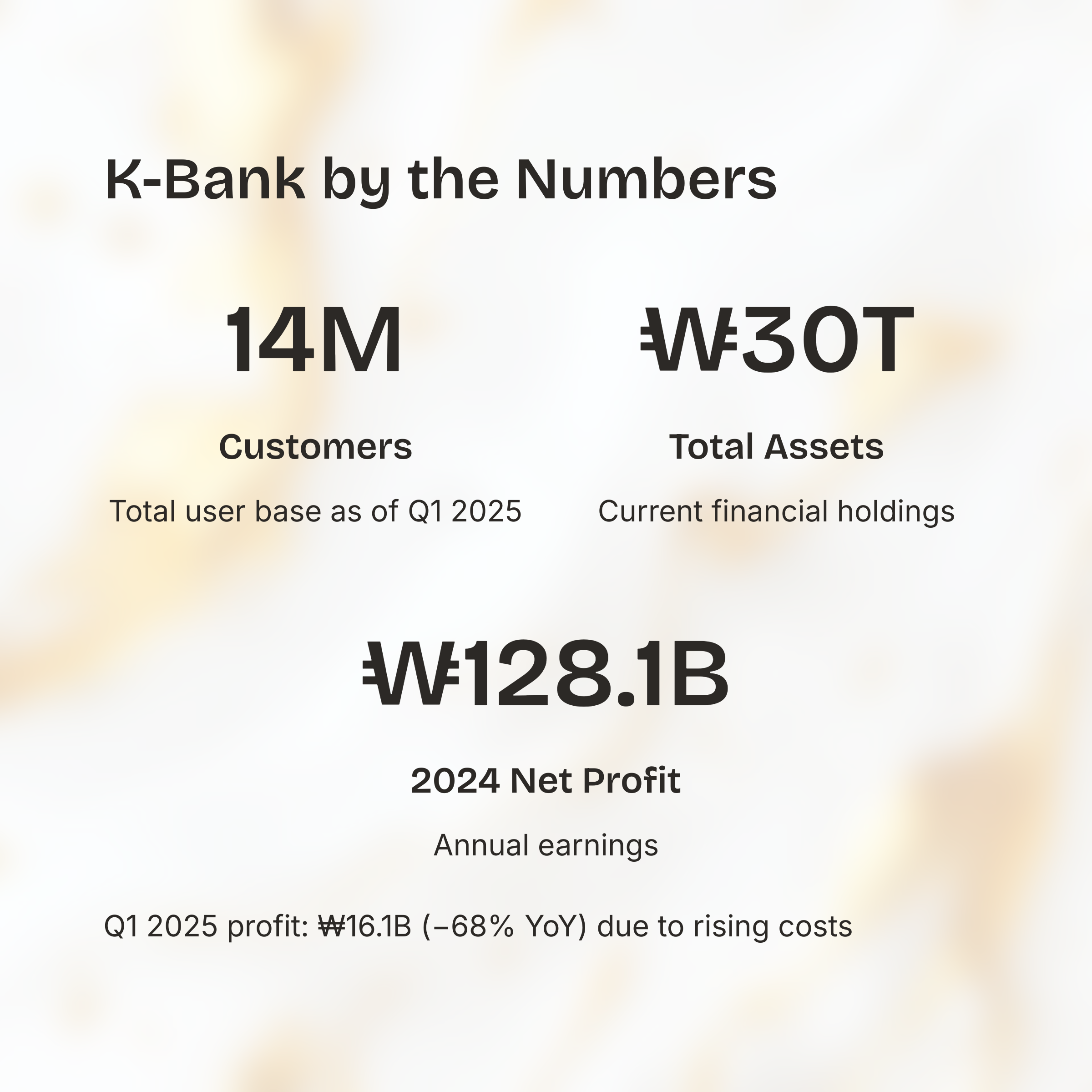
Since its launch in 2017, K-Bank has grown significantly in Korea’s digital finance space:
- Customers: 14 million (as of Q1 2025)
- Total assets: KRW 30 trillion
- 2024 Net profit: KRW 128.1 billion
- Q1 2025 Net profit: KRW 16.1 billion (–68% YoY)
The drop in quarterly profit reflects rising interest costs and compressed net interest margins.

2. Why a Third IPO Attempt?
Unlike the previous two delays, this time the IPO is essential due to contractual obligations:
- KRW 725 billion in FI investments since 2021
- Agreements include drag-along rights and put options
- IPO must happen before July 2026 or trigger buyout liabilities

3. Valuation Tug-of-War
| Category | IPO Price Band | Market Estimate | OTC Price |
|---|---|---|---|
| Public Offer Range | KRW 9,500–12,000 | ≈ KRW 3.5 trillion | KRW 8,700–9,000 |
Comparison with KakaoBank
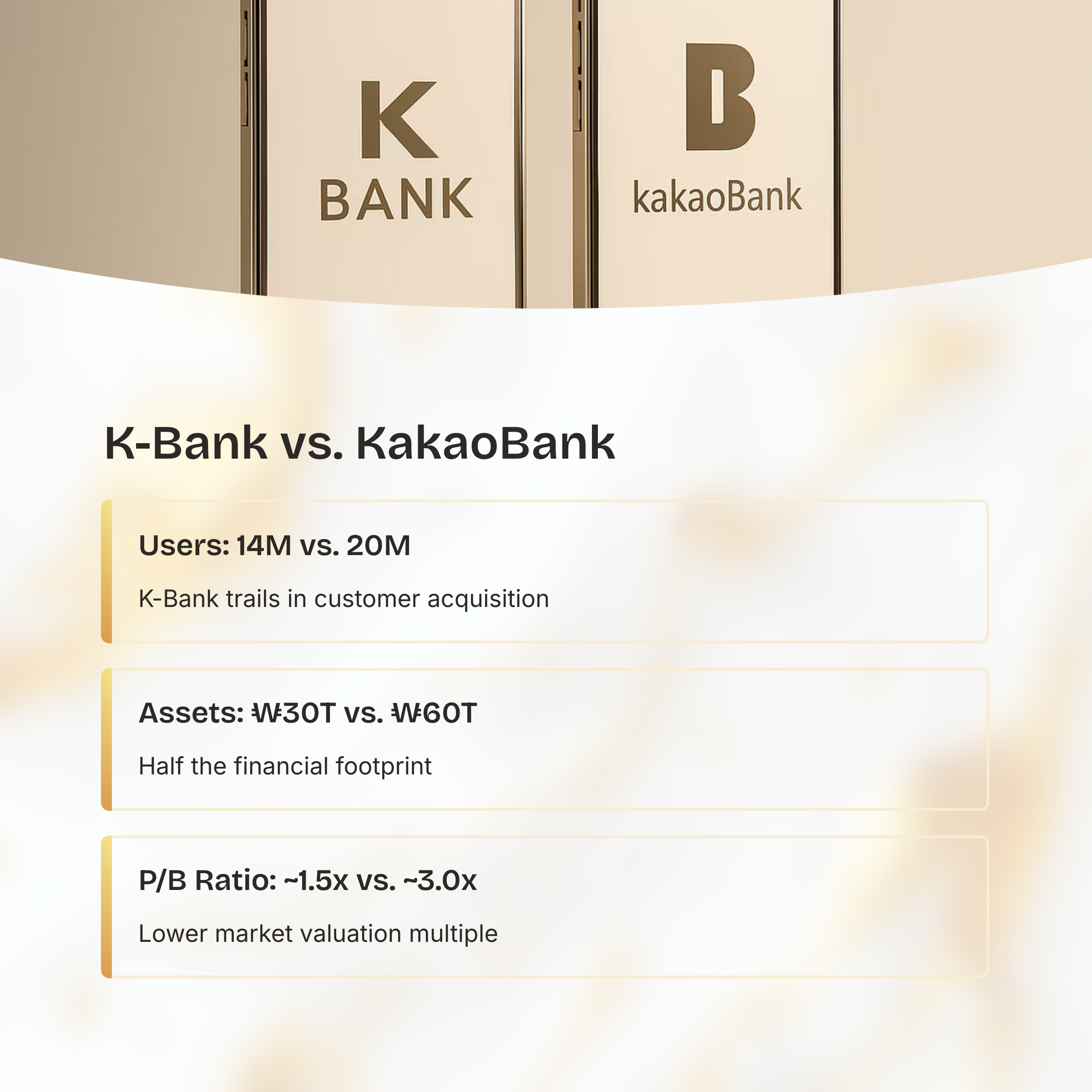
- Users: 14M vs. 20M
- Assets: KRW 30T vs. KRW 60T
- P/B Ratio: ~1.5x vs. ~3.0x
- Brand Power: Moderate vs. Strong
4. Dependency on Upbit
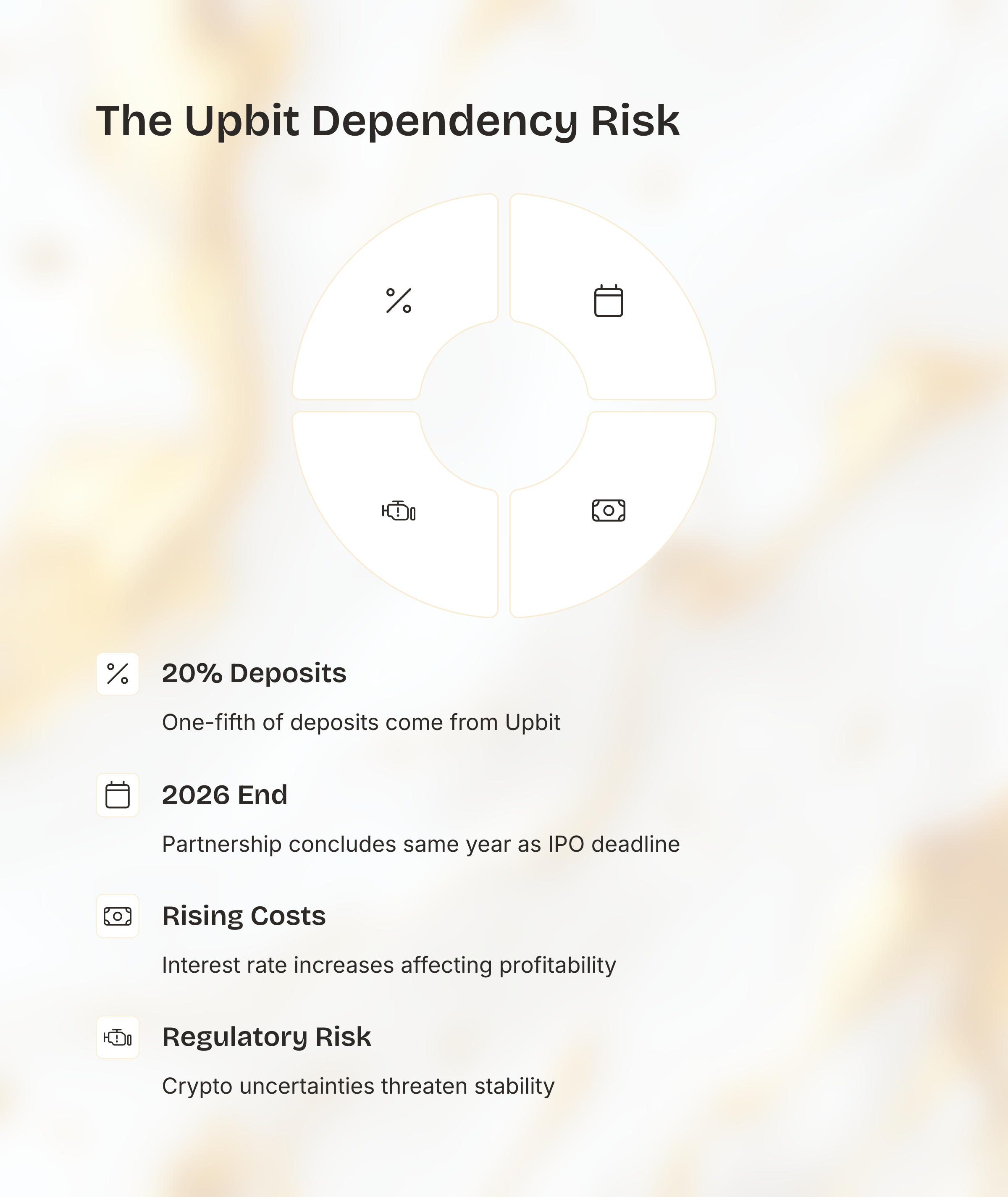
Approximately 20% of K-Bank’s deposits come from Upbit users, Korea’s leading crypto exchange. As interest rates rise, these funds become costlier. Regulatory uncertainty and the 2026 expiry of their partnership add risk.
Strategic Response:
K-Bank must diversify by expanding partnerships with other fintech platforms.
5. Future Growth Drivers
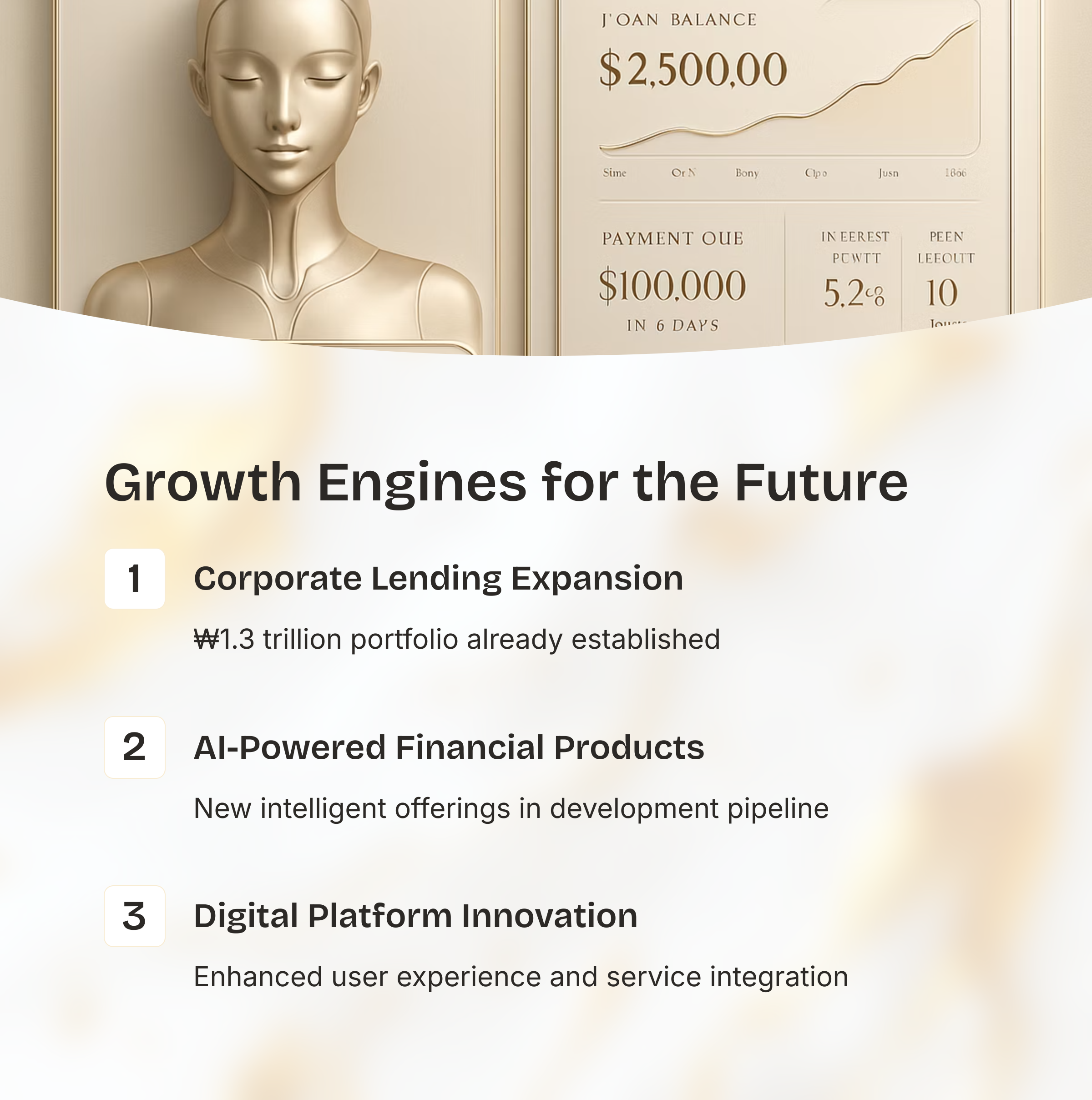
K-Bank is investing in AI-powered financial products and expanding its corporate loan portfolio:
- Corporate loans: KRW 1.3 trillion
- AI-based products in development
- Platform upgrades and digital infrastructure expansion
6. IPO Timing Considerations
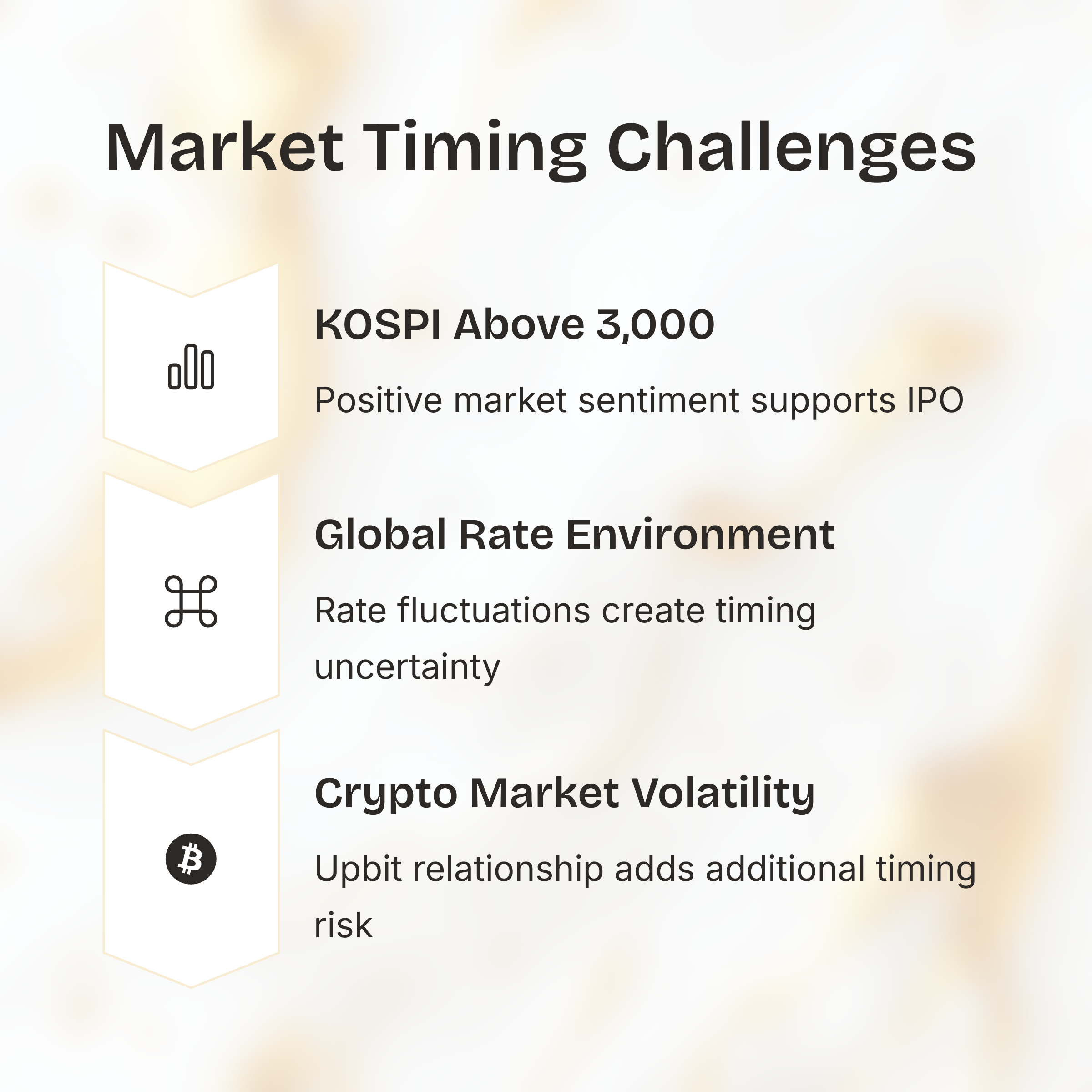
The KOSPI index crossing 3,000 is a bullish signal. But rate hikes, global volatility, and crypto regulations remain headwinds. Timing the IPO properly is critical to ensure institutional investor buy-in.
7. Summary
| Metric | Value |
|---|---|
| Total Customers | 14 million |
| Total Assets | KRW 30 trillion |
| 2024 Net Profit | KRW 128.1 billion |
| Q1 2025 Net Profit | KRW 16.1 billion |
| FI Investment | KRW 725 billion |
| IPO Band | KRW 9,500–12,000 |
| Estimated Valuation | ~KRW 3.5 trillion |
| OTC Share Price | KRW 8,700–9,000 |
| IPO Deadline | July 2026 |
✅ Conclusion
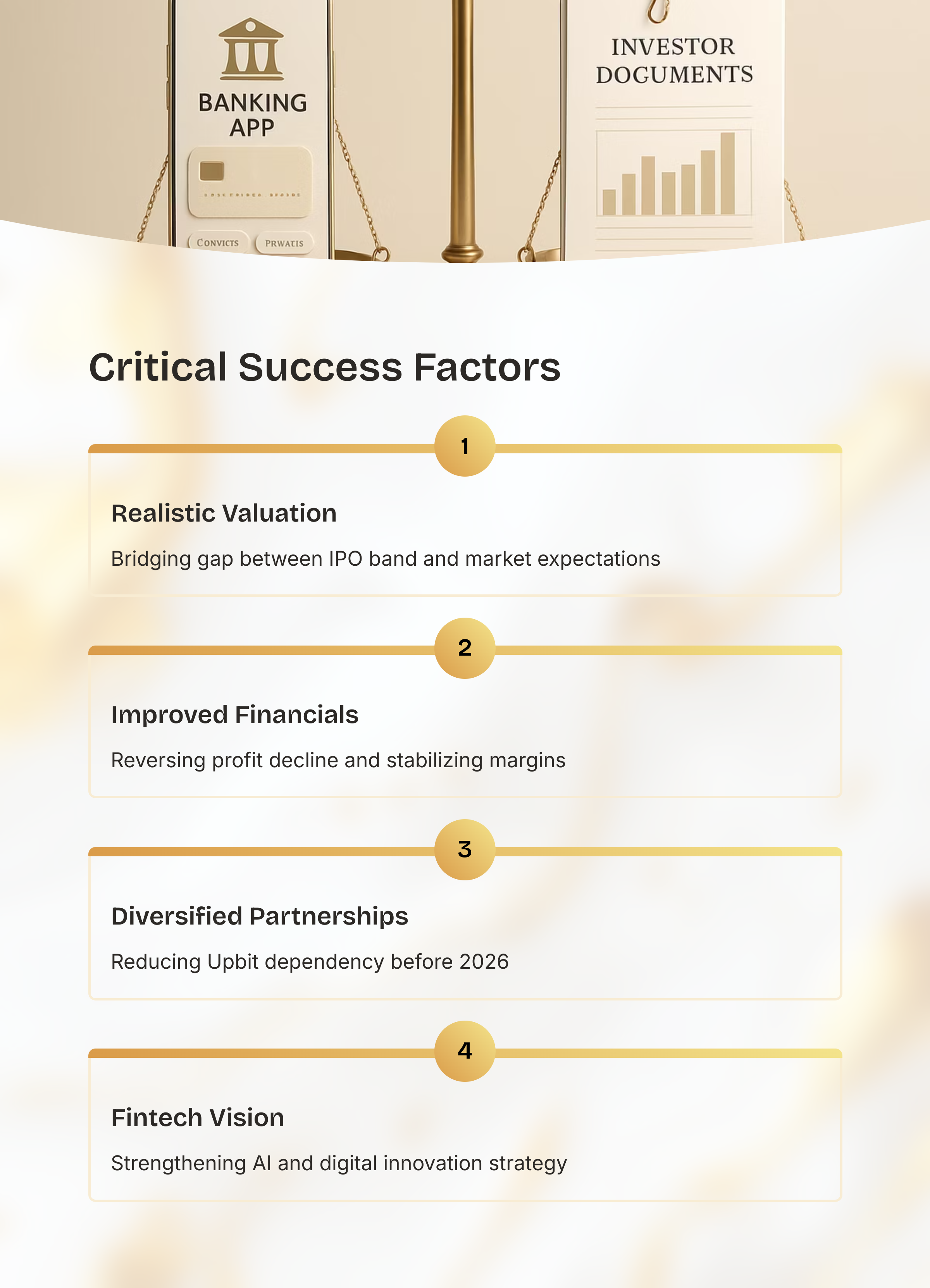
- Adjust valuation to reflect market expectations
- Improve profitability and stabilize margins
- Reduce dependence on Upbit
- Leverage AI and digital innovation
- Strengthen investor communications
- Align IPO schedule with favorable market windows
🔗 Reference Links
🔒 Unauthorized Copying & Redistribution Notice
This blog post is original content created through direct research and writing.
Unauthorized copying, plagiarism, scraping, republishing, or redistribution is strictly prohibited and may result in legal action under applicable laws.
For commercial use or secondary distribution, please contact us in advance.
'재테크 & 소비전략' 카테고리의 다른 글
| 영등포 대선제분 부지 개발 총정리 (14) | 2025.07.19 |
|---|---|
| 칼데라 코인(Caldera, ERA), 메타레이어와 맞춤형 롤업 시대의 핵심 (6) | 2025.07.18 |
| 케이뱅크 IPO 분석: 세 번째 도전과 전망 분석 (4) | 2025.07.18 |
| 지니어스 법안(GENIUS Act) 최신 현황과 미국 스테이블코인 규제 방향 (2) | 2025.07.16 |
| 영등포 재개발 총정리 및 1-11구역 분석 (6) | 2025.07.16 |


